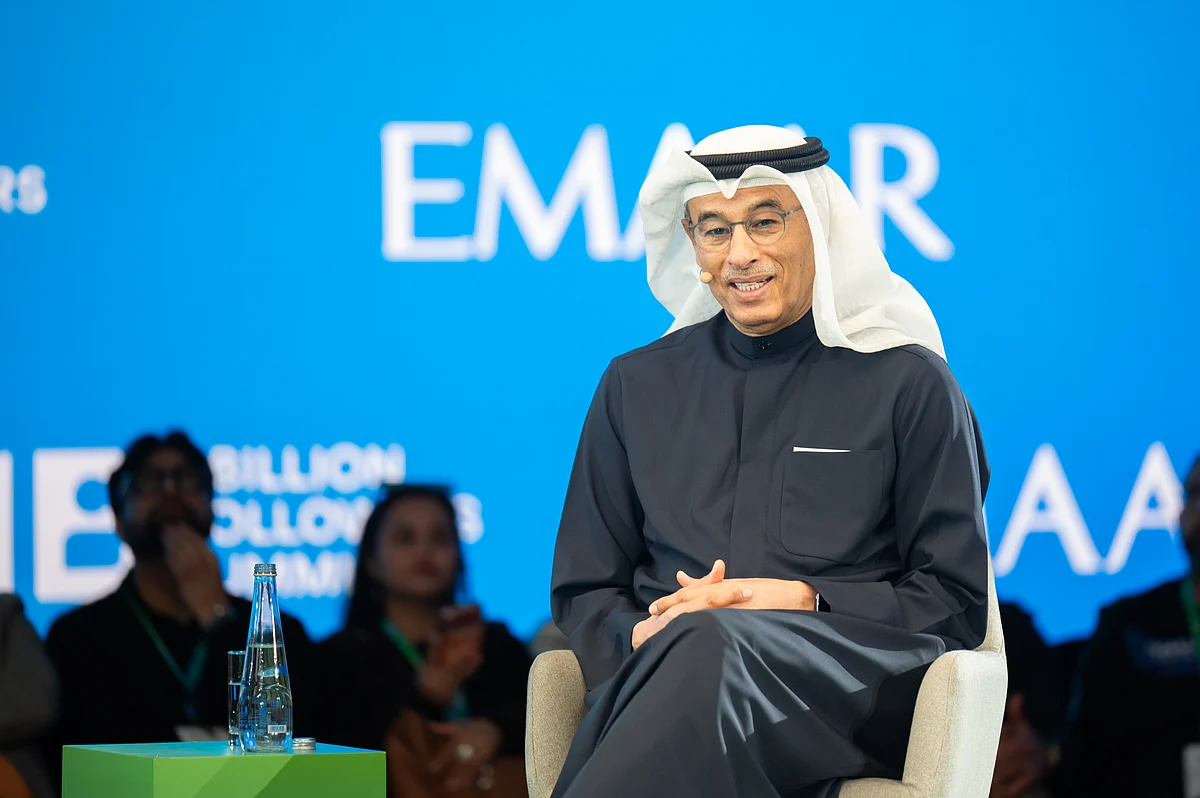
The Dubai property market remains resilient despite ongoing geopolitical tensions in the region, according to Mohamed Alabbar, founder and CEO of Emaar Properties.
Speaking in a recent interview with CNBC, the Emirati real estate mogul said he has no concerns about the long-term outlook of Dubai’s real estate sector—even as a significant wave of new property supply is expected to enter the market in 2026 and 2027.
“We are not here for the short run. We are here for a long, long time to do business,” Alabbar said, emphasizing that Dubai’s property market is built on long-term vision rather than speculative cycles.
Long-Term Planning Over Short-Term Speculation
Alabbar explained that new supply entering the market in the coming years should not be viewed as a risk but as a natural result of a market designed around decade-long development ambitions.
While he acknowledged the possibility of a brief cooling period, he expressed confidence that the sector would continue to thrive.
The UAE real estate market has experienced strong growth in recent years, attracting investors from around the world seeking stability, long-term value, and strategic opportunities in a globally connected city.
Market Confidence Reflected in Seller Behavior
To illustrate the strength of the market, Alabbar shared a personal experience while searching for a seafront apartment for his own use.
After spending two days exploring potential properties, he said he noticed something striking: not a single seller was willing to negotiate on price.
“Nobody wants to budge. Nobody wants to give a discount,” he said. “That’s a true situation.”
According to Alabbar, this unwillingness to offer price reductions reflects strong confidence among property owners and signals a healthy market environment.
A Debt-Resistant Real Estate System
Another factor that distinguishes Dubai’s property market from many others around the world is its limited reliance on bank borrowing.
Alabbar pointed out that lending to property buyers in the United Arab Emirates is tightly regulated, reducing the risk of the credit-driven property bubbles that have affected other global markets.
“Our real estate business is not built on bank borrowing,” he explained. “Bank borrowing is very restricted in this market.”
Because of this structure, the market is less vulnerable to financial shocks caused by excessive leverage or speculative lending practices.
Stability and Leadership Attract Global Investors
Alabbar also addressed concerns about regional geopolitical tensions, including the broader instability affecting parts of the Middle East.
He emphasized that investors who closely study the UAE’s long-term policies consistently find the same key qualities: stability, consistency, sustainability, and strong governance.
“A country like this, with all these principles and stable leadership and the safety, it has shown that it can deliver,” he said.
He also expressed admiration for the country’s leadership and its ability to implement long-range strategic planning, noting that global investors recognize the value of such stability.
Dubai Continues to Draw Global Capital
Despite regional uncertainty, Dubai continues to attract international investors and high-net-worth individuals seeking secure investment destinations.
Industry experts have recently pointed out that the emirate has defied regional tensions, with $100-million property deals still taking place, demonstrating sustained confidence in the market.
According to Alabbar, investors with significant capital understand the long-term advantages offered by Dubai and the UAE.
“People with true capital understand this, they appreciate this, and they will double down on investing,” he said.
A Market Built for the Future
With strong leadership, strict lending rules, and long-term urban planning, Dubai’s real estate sector has built a reputation for resilience and growth.
For developers like Emaar and investors worldwide, the emirate continues to stand out as a stable, forward-looking hub for global property investment—even during periods of regional uncertainty.
Post Views: 1,209