Innovative bio-textile developed from Red Sea algae positions the Kingdom as a global leader in environmentally conscious fashion technology.
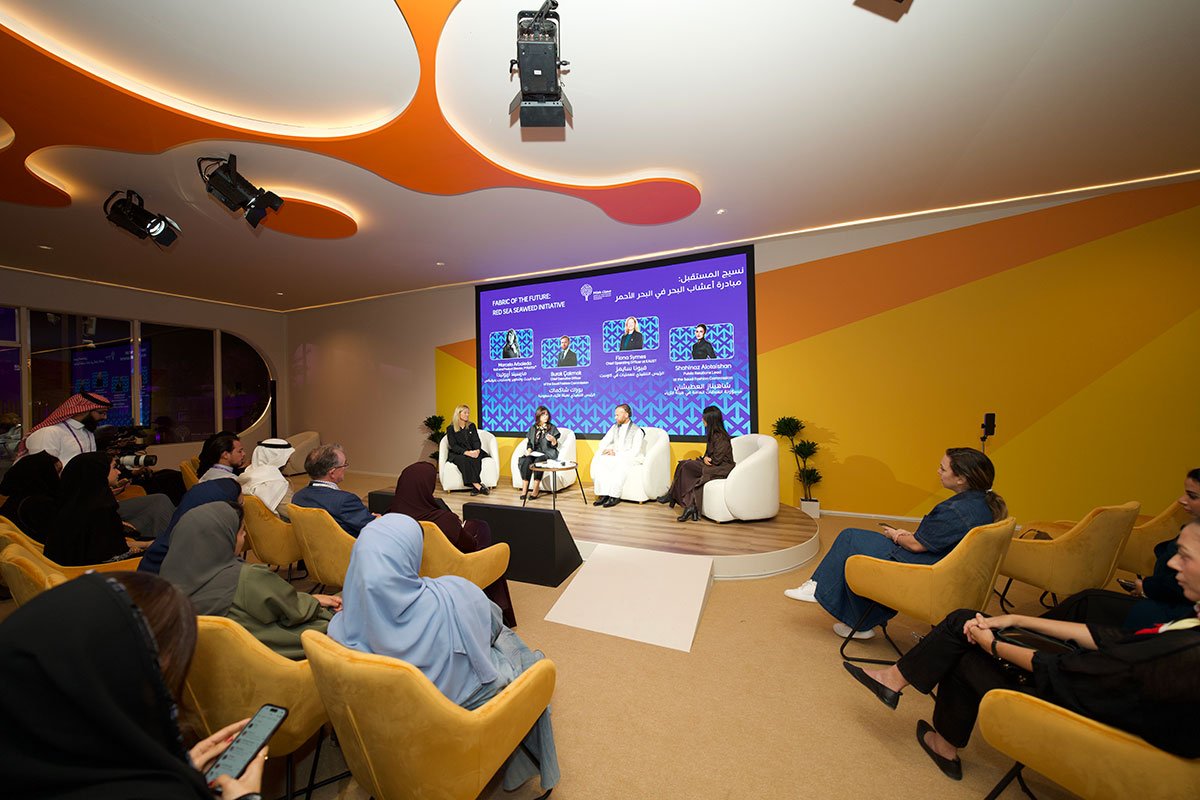
In a landmark moment for the region’s growing sustainable fashion ecosystem, the Fashion Commission has unveiled its groundbreaking Red Sea Seaweed Project, introducing a next-generation bio-textile developed from marine algae native to the Red Sea. The announcement was made at the prestigious Misk Global Forum, signaling Saudi Arabia’s accelerating commitment to innovation, sustainability, and the future of textile production.
Revealed during the panel titled “Fabric of the Future: Red Sea Seaweed Textile,” the initiative brought together leading voices in science, sustainability, and fashion innovation. The session featured Burak Çakmak, CEO of the Fashion Commission; Fiona Symes, COO of KAUST Beacon Development (KBD); and Regina Polanco, CEO of PYRATEX — the global material science company specializing in natural, eco-friendly fibers.
The newly developed textile represents more than a scientific breakthrough; it marks a defining step in Saudi Arabia’s mission to shape a world-leading, environmentally driven fashion industry. By harnessing the unique properties of Red Sea algae, the project introduces a renewable, biodegradable, and low-impact alternative to traditional synthetic fabrics and water-intensive natural fibers.
The collaboration between the Fashion Commission, KBD, and PYRATEX underscores a unified effort to push technological boundaries while addressing global sustainability challenges. By leveraging the Kingdom’s vast marine resources and scientific infrastructure, the initiative aims to lay the foundation for local bio-based textile production — ultimately reducing environmental impact and strengthening the region’s innovation capabilities.
As global fashion transitions toward circularity, transparency, and responsible sourcing, Saudi Arabia’s Red Sea Seaweed Project stands as a testament to the Kingdom’s vision for a greener, more resilient future. With continued research, development, and collaboration across sectors, this breakthrough has the potential to redefine not only the region’s fashion landscape but also the global materials industry at large.